
About
Drew Lentz
Wireless network engineer, podcaster, and connectivity advocate — better known online as the Wireless Nerd.
I'm Drew Lentz, a wireless network engineer with more than twenty years in the data-delivery industry and better than a decade focused squarely on wireless. I'm based in the Rio Grande Valley of South Texas, and I've spent my career doing two things that turn out to be the same thing: designing wireless networks that work, and getting connectivity to people who don't have it.
Most of my work lives in the gap between "the slide deck says it works" and "it actually works when 40,000 people show up." I've designed and deployed Wi-Fi for stadiums and pop-up events, restaurants and retail, hospitals and hotels, RV parks and courthouses — and whole communities. I care about the unglamorous parts: predictive design you can trust, site surveys done right, RF that behaves outdoors, and backhaul that reaches where the fiber maps stop.
Before the Wi-Fi, there was the show
I've been putting signal in the air and shows in front of crowds since before I could drive. In high school I worked at the local classic-rock station — running the boards, pulling commercials, riding the satellite feeds, and holding down the overnight shift as an on-air personality. At fourteen I started producing events, and that turned into a decade-long second career under my events company, Energetik Events: from 1998 to about 2009 I did full-scale event production — design, programming, staging, speaker and lighting rigs, lasers, talent acquisition and booking, producing the whole show, and DJing it myself — for crowds that ran from fifty people to five hundred to more than five thousand.
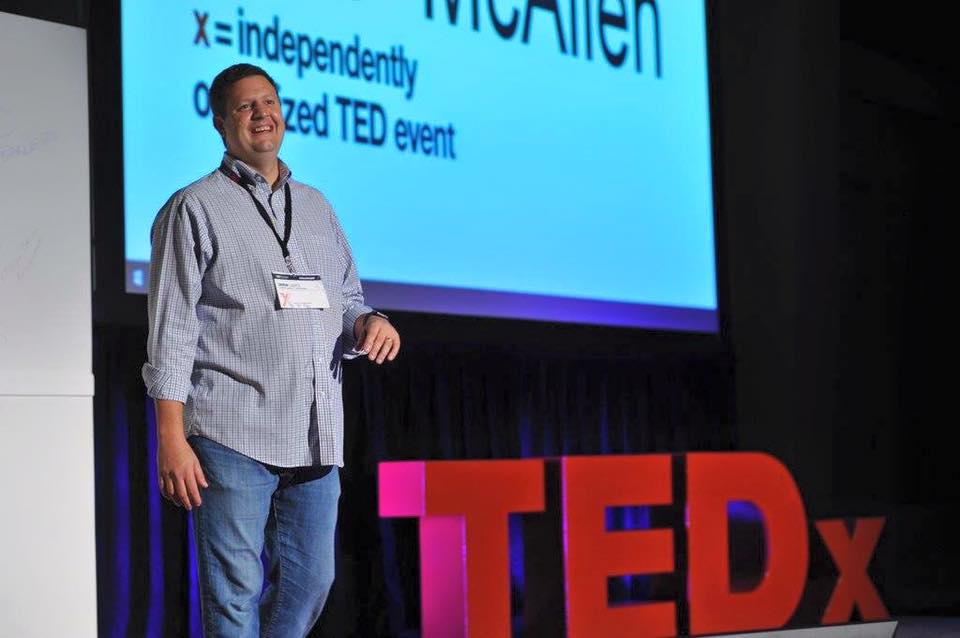
That work brought some of the biggest talent in the region to a live audience, and it eventually became a mission. I founded the South Texas Community Arts Foundation, a 501(c)(3), so I could produce events that gave back — the area's first community-driven, family-friendly, and pet-friendly events, built specifically to raise the quality of life here. The flagship was Sunset Live at the McAllen Convention Center, produced in coordination with the McAllen Chamber. I was also the local license holder for TEDxMcAllen — the first person to bring TEDx to McAllen, Texas — and produced a run of events that culminated in the largest TEDxMcAllen to date in 2015. Different medium, same instinct I still run on today: build the thing that brings people together, and make sure it works the moment the crowd shows up.
That work never really stopped. Sunset Live has run at the McAllen Convention Center ever since, and I still partner with nonprofits across the Rio Grande Valley to design and produce events of every size — staging, lighting, build-out, and AV, plus the temporary Wi-Fi networks that keep auctions, galas, and fundraisers running when hundreds of people and their phones all arrive at once. It's the cleanest proof of how the two halves of my career fit together: the person who produces the show can also guarantee the network underneath it.
The digital divide is the throughline
The work I'm proudest of is closing the connectivity gap in my own backyard. In 2017, Cambium Networks named me a two-time Connectivity Hero — Connectivity Hero of the Year for my body of connectivity work, and a separate Connectivity Hero award for disaster-response work after a hurricane. That same drive shows up in projects like McAllen, Texas, where we put roughly 1,000 access points and CBRS endpoints in the field in about 60 days to get families connected. I've spent years arguing, in writing and on stage, that we shouldn't wait for a fiber-only future to give people internet today. Fixed wireless, CBRS, shared spectrum — these are tools that work now.
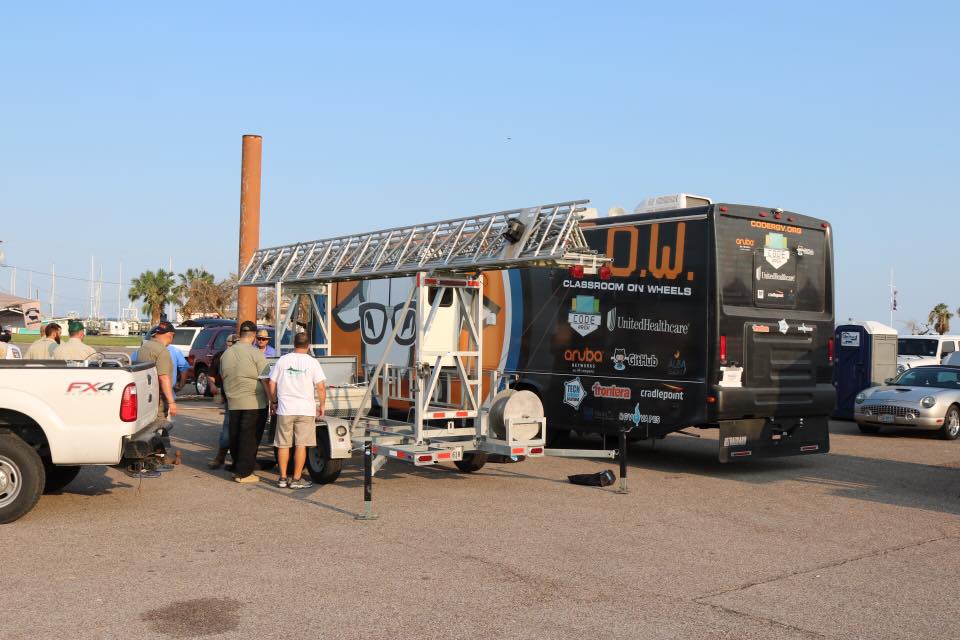
The disaster-response side of that recognition is literal. Through CodeRGV, we converted RVs into C.O.W.s — Classrooms on Wheels, and when hurricanes knocked out communications we rolled them into the hardest-hit towns as Connectivity on Wheels: mobile hubs that gave families a place to get back online, charge phones, and reach relief services when everything else was down. CodeRGV's emergency-response writeup and local coverage of the storm-hit town we set up in tell that story.
"When solving the digital divide, it's time to lose the fiber-only mentality."
Waves with Wireless Nerd
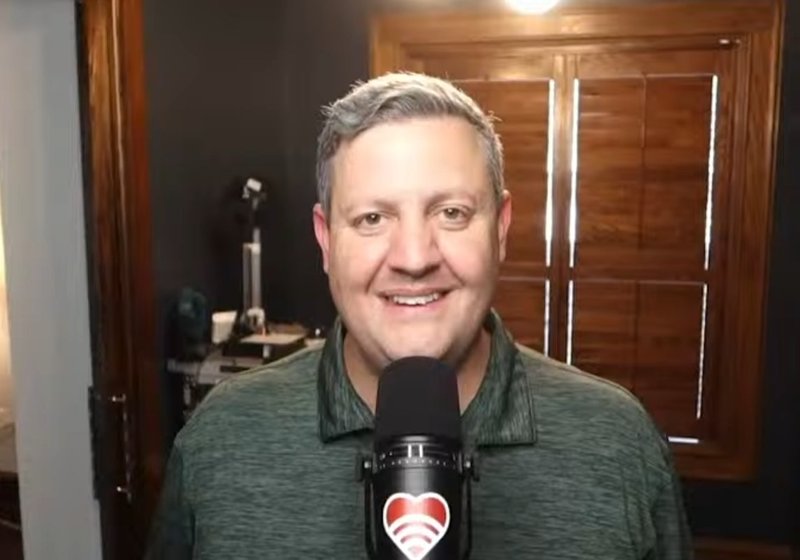
Every week I host Waves with Wireless Nerd, a podcast that breaks down the biggest stories in Wi-Fi and the wider wireless world — what's new, what's now, and what's next. It's news and analysis for working engineers, mixed with field reports from the road: CES, NRF, WLPC, WiFiNow, AWS re:Invent, and real deployments like the World Surf League US Open. You can listen on Apple Podcasts, Spotify, YouTube, and everywhere else.
Recent field work
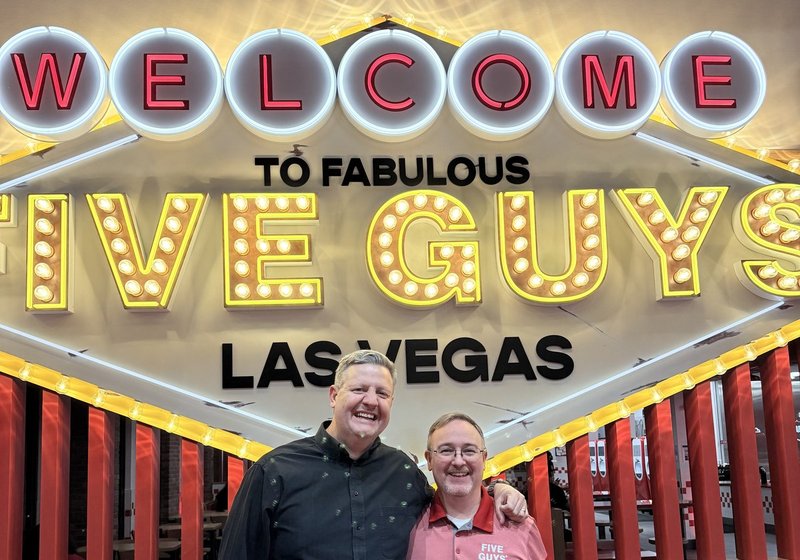
The last year alone: I led the network build for the sold-out Palm Tree Music Festival in Santa Barbara — dozens of vendor point-of-sale systems, artist media teams, and thousands of fans on outdoor multi-gig Wi-Fi with zero dropouts all weekend. I stood up connectivity for the World Surf League across three tour stops (Pipe Pro, Trestles Pro, and the US Open of Surfing), where the same network carried real-time judge scoring, live broadcast, athlete video review, and beachside retail on segmented SSIDs. And I designed the network running the largest Five Guys in North America — 10,000 square feet in Las Vegas operating nearly around the clock, where six POS lanes, four ordering kiosks, and six digital menu boards pushed 100,000+ burgers and millions in transactions with zero network issues.
Different industries, same discipline: when the register, the scoreboard, or the broadcast rides on RF you designed, "pretty reliable" isn't a spec.
On stage and in the community
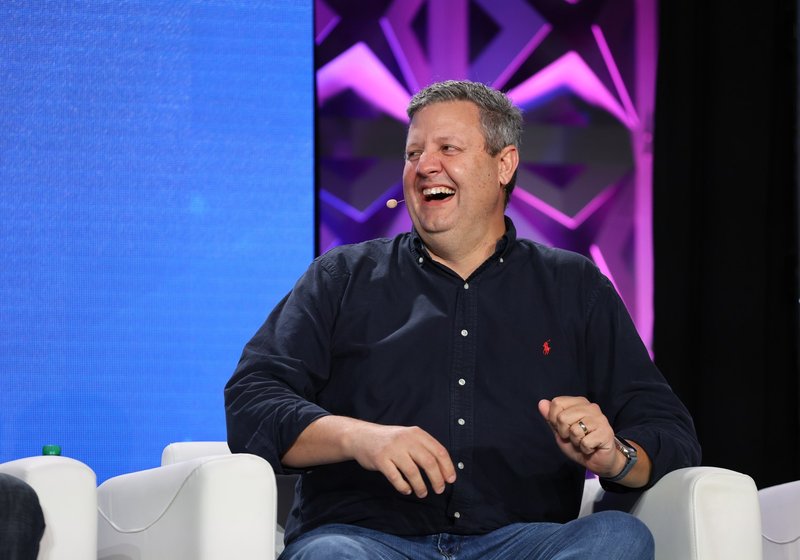
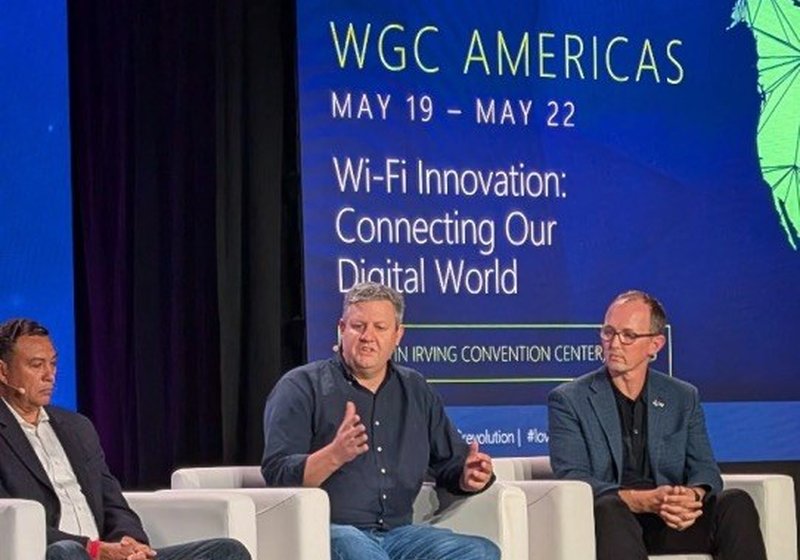
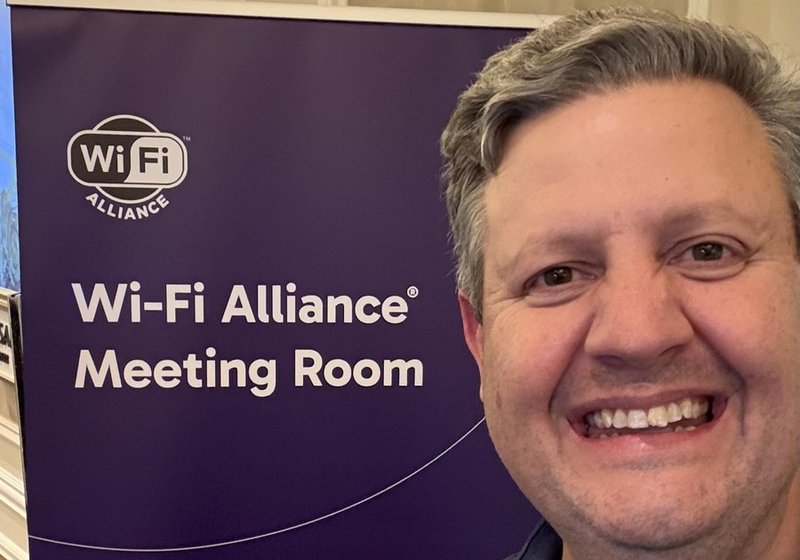
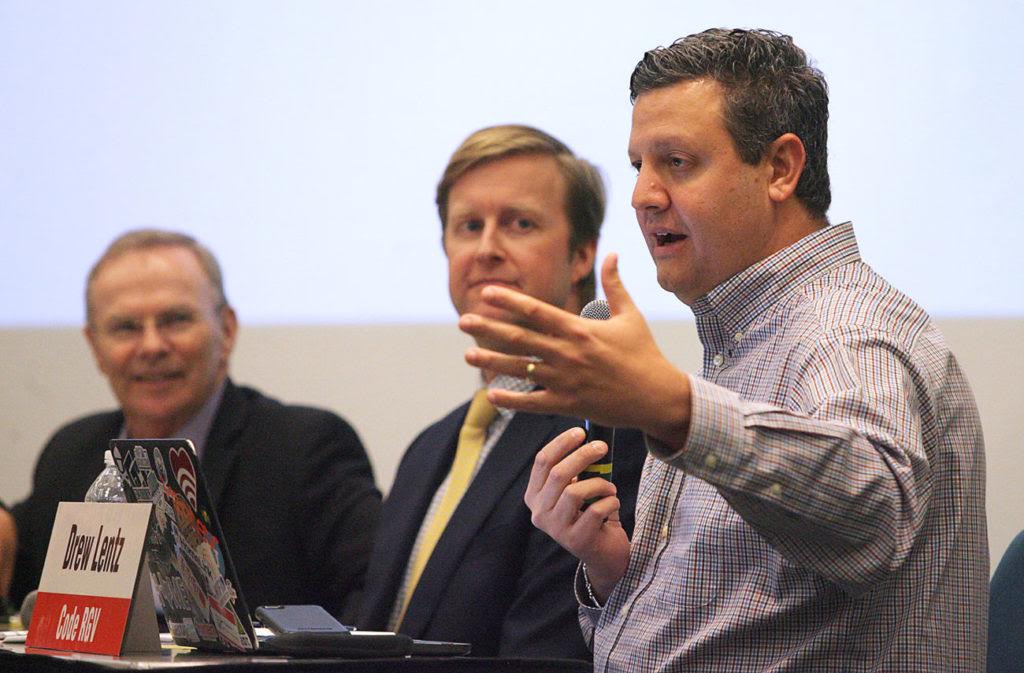
- WLPC — presenter and former track chair at the Wireless LAN Professionals Conference, the premier vendor-neutral enterprise Wi-Fi event.
- Tech Field Day / Mobility Field Day — invited independent delegate across roughly a dozen events.
- CodeRGV — president and co-founder of a South Texas nonprofit teaching computer science and building the next generation of nerds, including disaster-response tech work after Hurricane Harvey.
- BSidesRGV — presenter on wireless security at the Rio Grande Valley's community information-security conference.
- Local media — a go-to source for South Texas talk radio, TV, and podcasts, called on regularly for on-air commentary on technology, wireless, and security.
- Broadband advocacy — a steady voice for the Rio Grande Valley on the RGV Broadband Coalition and with the Texas Broadband Development Office.
- Amateur radio — licensed ham (call sign KE5ZJO) and a member of the Rio Grande Valley Amateur Radio Club. Wireless, all the way down.
What I work on
Enterprise WLAN design and troubleshooting; Wi-Fi 6, 7, and 8; site surveys and RF planning; CBRS and fixed-wireless access; outdoor and high-density deployments; hospitality and retail Wi-Fi; and municipal and community broadband. When I'm consulting, that work runs through Frontera Consulting — and I've founded companies people in the industry know on their own terms: SignalRoam (connectivity as a service — indoor cellular over existing Wi-Fi, Passpoint, and private 4G/5G), GuardSense (real-time visitor management), WiFiStand, and The Wi-Fi Survey Kit.
Work with me
I speak at conferences, consult on connectivity projects, and take on podcast sponsors who actually belong in front of a wireless audience. The fastest way to reach me is drew@drewlentz.com. More options are on the contact page.
Straight answers
Frequently asked
Who is the Wireless Nerd?
The Wireless Nerd is Drew Lentz, a wireless network engineer with more than 20 years in the industry, based in the Rio Grande Valley of South Texas. He hosts the weekly podcast Waves with Wireless Nerd, writes about Wi-Fi engineering and broadband policy, and advocates for closing the digital divide. He is a two-time Cambium Networks Connectivity Hero (2017), named Connectivity Hero of the Year for his connectivity work and recognized as a Connectivity Hero for disaster response after a hurricane.
What is Waves with Wireless Nerd?
Waves with Wireless Nerd is a weekly technology podcast hosted by Drew Lentz that breaks down the biggest stories in Wi-Fi and the wireless industry — what's new, what's now, and what's next. Episodes cover Wi-Fi 6, 7, and 8, spectrum policy, satellite connectivity, vendor news, and real-world deployments. It's available on Apple Podcasts, Spotify, YouTube, iHeartRadio, and Amazon Music.
What does Drew Lentz specialize in?
Drew specializes in wireless network design and deployment: enterprise WLAN, Wi-Fi site surveys and RF planning, outdoor and high-density Wi-Fi, CBRS and fixed-wireless access, and municipal and community broadband. He is especially known for large, fast deployments — including 1,000 access points and CBRS endpoints in 60 days to bridge the digital divide in McAllen, Texas.
How can I book Drew to speak or consult?
Drew speaks at wireless and technology conferences and consults on connectivity projects through Frontera Consulting. The fastest way to reach him is email at drew@drewlentz.com, or via the contact page on wirelessnerd.net.
What's the difference between Wi-Fi 6, Wi-Fi 7, and Wi-Fi 8?
Wi-Fi 6 (802.11ax) introduced OFDMA and better efficiency in dense environments. Wi-Fi 7 (802.11be) added 320 MHz channels, 4K-QAM, and Multi-Link Operation for much higher throughput and lower latency. Wi-Fi 8 (802.11bn) shifts the goal from raw speed to reliability — its headline feature is multi-AP coordination, where access points cooperate to deliver consistent performance rather than just faster peaks. Drew covers this progression regularly on the Waves podcast.